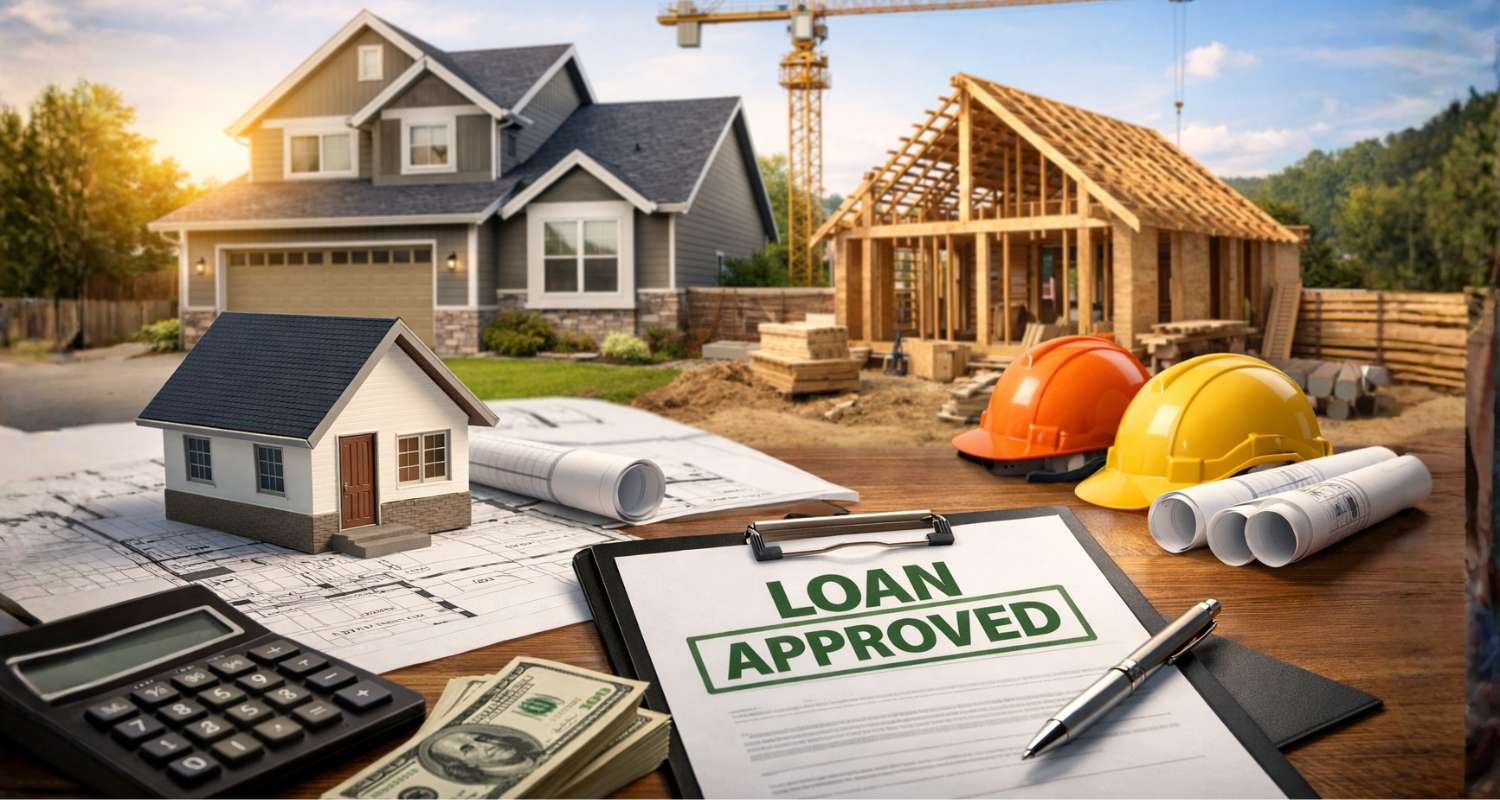
Construction completion loans are a specialized financing solution for property owners facing unfinished projects. These loans address a specific problem that traditional financing cannot solve effectively.
The common scenario involves a paid-off property with stalled or unfinished construction where the owner has run out of capital mid-project. Rising material costs, contractor change orders, or unexpected delays have consumed the original budget, leaving valuable projects incomplete.
Borrowers face significant obstacles when traditional lenders won’t fund partially completed projects, viewing them as too risky or outside standard lending parameters. EquityMax is a solution-focused lender that helps borrowers finish strong by providing flexible capital when conventional options are unavailable.
The more work a real estate investment property entails, the more uncertainty exists. This is especially true on heavy rehab or ground-up new builds, where changing material and labor costs mid-project can destroy budgets. What an investor budgeted at the onset could be completely different mid-way or towards the end. Sometimes, these people need a bridge to reach the finish line, and that’s where a solution-focused lender like EquityMax comes into play. Construction completion loans can be your “ace in the hole” to get you to the finish line on a project that may have stalled.
A construction completion loan provides financing specifically designed to finish an existing build or renovation that has stalled before completion. Unlike conventional construction loans that fund entire projects from the beginning, completion loans step in midstream to provide the capital needed to reach completion.
These loans differ fundamentally from ground-up construction loans that finance new builds from foundation through certificate of occupancy, standard renovation loans that finance repairs on habitable properties, and cash-out refinancing that extracts equity from completed properties. Funds from completion loans are used specifically to complete remaining work on stalled projects, not to start construction from scratch through specialized financing solutions.

Speed, flexibility, and asset-based underwriting represent the core features that make completion loans effective. Traditional lenders take weeks or months for approvals, but completion loan specialists move quickly because stalled projects deteriorate rapidly.
Owning a property free and clear reduces lender risk dramatically by eliminating competing debt claims and simplifying the lien position. When no existing mortgage encumbers the property, the completion loan lender takes first position, providing maximum security.
Stronger loan-to-value positioning for borrowers results from accumulated equity in paid-off properties that provides a substantial cushion for lenders. Existing equity increases approval odds, enables more flexible loan structures, and leads to faster underwriting decisions.
Traditional banks still hesitate despite strong equity because their underwriting systems cannot accommodate mid-construction scenarios. Hard money lenders like EquityMax prove uniquely suited for these scenarios because they evaluate each deal individually based on asset value and completion viability.
Simply put, the single biggest factor that a lender wants to see in this type of financing is that the property is free and clear of any other mortgages. If you come to a lender for construction completion financing with a mortgage already encumbering a property, that lender will surely start asking questions about why the existing loan was insufficient to finish the project.
The completion loan process follows five key steps that transform stalled projects into finished, profitable properties.
Lenders assess the property’s current condition through on-site inspections that verify completed work and remaining work. The importance of as-is value versus after-completion value drives loan sizing decisions. Lenders also consider location, market demand, and exit viability.
The first step a lender will take is to review the property. How is the condition? Is the work you’ve represented as completed actually finished? Does it look like an active construction site? With this information, a lender will assess the importance of the as-is value vs. ARV and will also consider the request relative to market demand, location, and exit viability.

A detailed scope of remaining work proves critical because lenders must verify that loan proceeds will actually complete the project. Reviewing line-item budgets, contractor estimates, and the timeline to completion allows lenders to validate cost assumptions through their renovation financing expertise.
What cannot be overstated is the need for a detailed, explicit blueprint of the work completed and the work to be finished. Ensure the schedule of values aligns with the order in which work will be completed. Be as detailed as possible, and get it right the first time. The last thing a lender wants to see is an initial budget that is repeatedly modified throughout the evaluation and underwriting process.
Typical loan terms are 6-12 months, with interest-only payments during construction. Loan amounts are determined based on remaining work requirements, the borrower’s equity position, and the viability of the stated exit strategy.
Draw schedules versus lump-sum funding depends on project complexity. Draw schedules protect lenders by ensuring funds are released only as work is completed. Flexibility relative to bank financing allows completion loan lenders to tailor terms to specific deal characteristics.
After the lender agrees on the work to be done, it’s time to discuss the loan terms. Is the loan going to be 100% of the remaining work, or are you required to bring additional equity to the table? Ensure that you and the lender are clear on the process to request draws and how money is disbursed upon approval of work completion. Generally, interest-only payments are the norm, and the loan term should not drag out past a year.
Asset-based underwriting rather than personal income analysis drives approval decisions. Lenders evaluate the property’s value, equity position, and completion viability rather than scrutinizing tax returns and pay stubs.
Credit is considered, but not the sole factor in approval. Ideal borrower profiles include real estate investors who ran out of capital mid-project, builders and developers facing unexpected cost overruns, and property owners finishing personal or investment projects.
Note that qualifying for a private money construction completion loan is not a traditional qualification process. The underwriting emphasis is placed on the asset value (both as-is and after-repair) of the property, not on personal financial credentials.
Funds are released according to the agreed schedule, whether as a lump sum or in phased draws tied to completion milestones. Timely completion protects equity by minimizing carrying costs and preventing property deterioration.
Common exit strategies include refinancing into long-term financing such as DSCR loans for rental properties, property sale to end buyers, or portfolio hold, where owners keep the completed property long-term. Completion unlocks the property’s full value by transforming a discounted, incomplete asset into a finished property commanding full market prices.
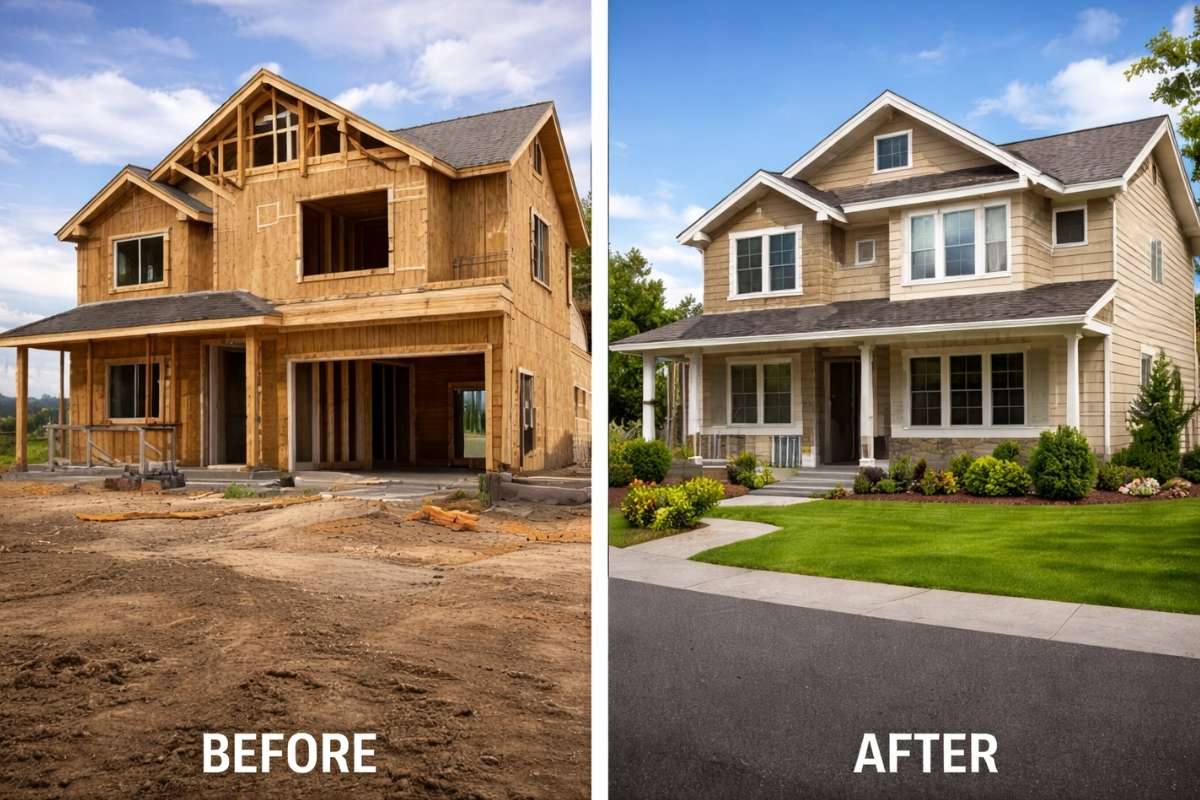
Rising construction costs and project delays have created unprecedented challenges for builders and investors. Material costs that doubled or tripled destroyed project budgets, leaving experienced investors short of capital to complete the projects. Traditional lenders have tightened construction lending requirements in response to market volatility.
The increase in stalled or partially completed properties is driven by rising costs and financing constraints. The importance of speed makes completion loan velocity critical for preserving value through EquityMax’s experience with complex scenarios.
Completion financing prevents asset deterioration, lost market opportunities, and forced discounted sales. Construction completion loans, whether hard or private money, are useful, even if they are not the first option for many investors. There are many factors that can cause turbulence in the middle of a construction project; however, hard money can still bridge the gap and stabilize your project to the goal of profitability.
Completion loans for paid-off properties offer significant value by converting trapped equity into completed, profitable projects. Key benefits include speed that prevents further value erosion, flexibility that accommodates unique situations, and equity-focused underwriting that approves deals based on asset value.
EquityMax’s 34 years of experience with complex, unfinished projects provides the expertise and capital that borrowers need to cross the finish line. Our asset-based approach and family capital allow flexibility that institutional lenders cannot match.
Property owners and investors should act before delays erode value further. The longer projects remain incomplete, the more equity is eroded by carrying costs and deterioration. Contact EquityMax today at (954) 267-9103 to discuss your construction completion loan needs and discover how we can help you finish your project efficiently and profitably.