
Real estate agents serve as frontline risk identifiers in investment transactions, often spotting potential problems before lenders, inspectors, or attorneys ever review the deal. Your position at the intersection of buyer, seller, and financing gives you unique visibility into warning signs that others miss.
Agents frequently identify deal issues first because you’re involved from property search through closing, observing buyer behavior, financing discussions, and deal structure decisions in real time. While lenders see snapshots, you witness the entire story unfold.
Missed red flags can lead to failed closings that waste weeks of work, damage your professional reputation, and result in lost commissions. Beyond immediate financial impact, deal failures strain relationships with clients and referral sources. The cumulative effect can significantly impact your annual income.
We have put together a practical guide to protecting your deals and clients by identifying common investment red flags before they derail transactions. Understanding these warning signs empowers you to ask better questions and guide clients toward stronger deals.
Think of a real estate investor as a sports team relying on multiple players. The general contractor fixes the property, the lender secures financing, and you find the investment property and shepherd deals through closing. As the agent, you’re a frontline employee without being one. You are present from the initial search through the final closing. At EquityMax, we value capable agents working in tandem with experienced lenders so clients can efficiently close their deals.
Red flags often appear early in initial conversations, preliminary documents, or unstated assumptions that seem minor but signal larger problems. One red flag doesn’t always kill a deal, but patterns of multiple warning signs should raise serious concern. Agents should ask clarifying questions rather than make assumptions when something seems off. Each red flag can significantly impact financing approvals, closing timelines, or exit strategy viability.
Proof of funds documentation proves critical for gaining seller confidence and securing lender approval. Sellers won’t take offers seriously without credible evidence that the buyer can close. Without solid proof of funds, your client’s offers get rejected.
Common warning signs include buyers providing screenshots instead of official bank statements. Screenshots can be easily manipulated and don’t provide the verification that official statements offer. Generic boilerplate language in prequalification letters without specific details signals that the letter lacks substance.

Funds held in inaccessible accounts like retirement funds without proper setup, or reliance on future capital that isn’t secured, create timing risks. If buyers can’t access funds when needed, the deal fails. These weaknesses create risks for escrow delays or complete closing failures. Experienced lenders validate capital sources early by requiring official proof of funds documentation that confirms financial capability.
Inflated ARV projections justify risky purchase prices that won’t generate profit when realistic values are applied. Buyers convince themselves they can pay top dollar by projecting unrealistic sale prices, creating deals that ultimately lose money.
Warning signs include comparing the subject property to superior properties with better locations or premium finishes. If comps include homes in gated communities while the subject sits on a busy street, the valuation lacks credibility. Ignoring market softening signals like increasing inventory or rising days-on-market leads to ARVs based on yesterday’s market.
Unrealistic ARVs impact financing approvals because lenders won’t fund loans based on values they can’t validate. If the appraiser arrives at an ARV significantly below the buyer’s projection, the loan is denied or reduced. Conservative valuations protect both agents and clients by accounting for market fluctuations and unexpected costs.
The “we’ll figure it out later” approach to financing creates uncertainty that often derails deals after contracts are signed. Buyers who haven’t secured financing commitments before making offers gamble with everyone’s time and money.
A common problem occurs when buyers switch loan types mid-transaction after realizing their original financing plan won’t work. Many start with conventional bank financing, only to discover that the property doesn’t qualify. This often happens with distressed properties, where buyers assume bank loans will work even though traditional lenders typically won’t finance homes that need significant repairs.

Undefined financing leads to appraisal, timing, and underwriting failures. Lender alignment before contract execution through hard money financing solutions ensures financing actually works for the specific property and investment strategy.
Timeline optimism derails investment returns by extending holding periods that multiply carrying costs. Investors who assume three-month renovations actually take six months face doubled mortgage payments, taxes, insurance, and utilities that eliminate profits.
Warning signs include ignoring permitting and inspection delays that add weeks or months. Underestimating labor and material availability in competitive construction markets leads to delays. Extended timelines significantly increase carrying costs; each additional month adds expenses that directly reduce profit.
Lenders and agents should stress-test renovation schedules by adding 25-50% buffers. Some lenders overpromise quick reimbursement for renovation costs, but experienced lenders provide realistic timelines and clear documentation of the draw process.
Every investment deal needs a primary exit strategy and a backup plan. Investments without clear exits expose everyone to unnecessary risk because profitability depends entirely on the successful execution of the exit.
Common weak exit strategies include vague statements such as “we’ll just sell it,” without market analysis to support achievable prices and timelines. Another red flag is “rates will be better by then,” which bets the entire investment on unpredictable future interest rate movements.

Unclear exit strategies increase lender risk and agent liability. Clarity of the exit strategy strengthens deal credibility for everyone involved. While you’re not deeply involved in the investor’s business model, understanding the exit timeline helps you vet financing options.
Inconsistencies signal either inexperience requiring guidance or intentional misrepresentation. Examples include buyers sharing different numbers with agents versus lenders. Missing renovation budgets that lack line-item detail suggest the buyer hasn’t planned thoroughly.
Incomplete financial information significantly slows down underwriting when lenders repeatedly request missing information. These delays damage trust and risk contract deadlines. While you’re not auditing finances, watching for discrepancies helps identify problems early. If renovation budgets lack thorough line items, ask questions immediately.
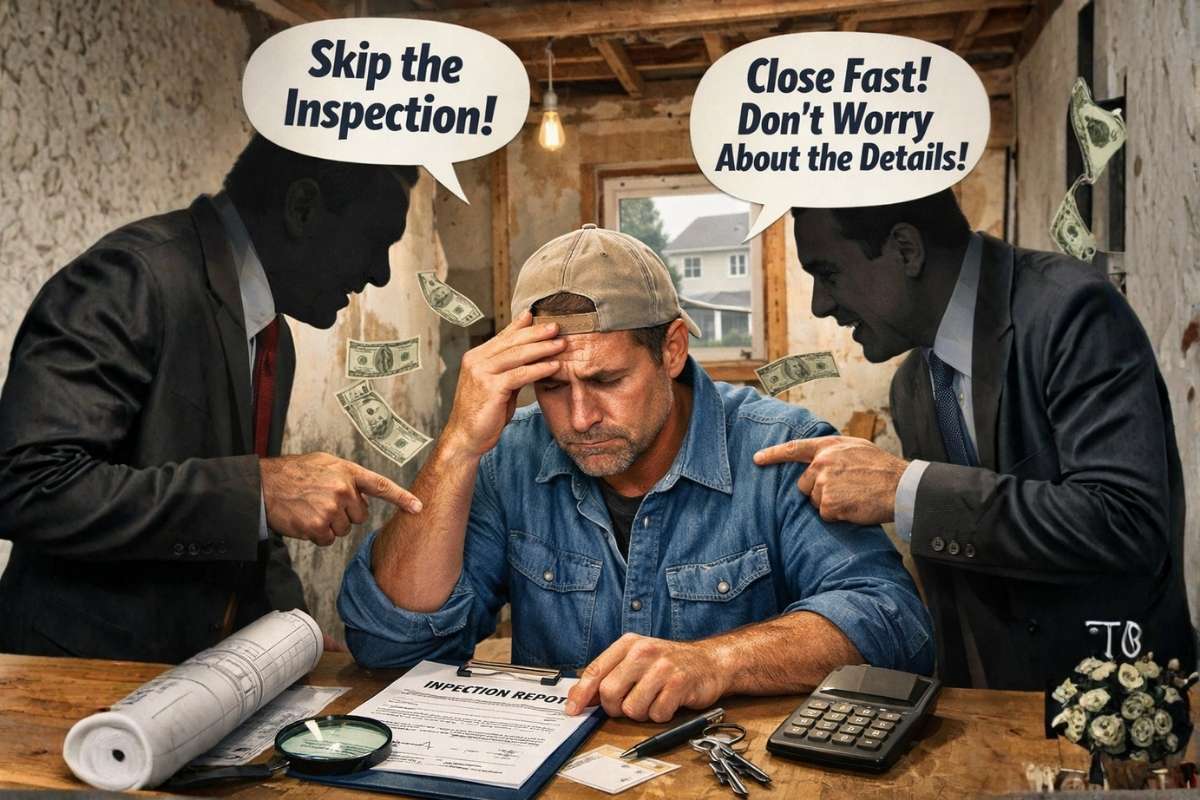
Common pressure tactics include rushing inspection periods without adequate property evaluation. Skipping contractor walkthroughs prevents accurate renovation cost estimates. Avoiding third-party reviews when property conditions warrant them exposes buyers to catastrophic risks.
Legitimate investors welcome thorough due diligence because it protects their investment. Agents face risks when corners are cut because clients may claim you should have insisted on proper diligence. Thorough diligence protects all parties by surfacing issues while solutions remain possible. Due diligence should always be welcomed, and corners should never be cut.
Certain properties require specialized financing that conventional loans can’t provide. Examples include heavy rehab projects paired with conventional loan applications that won’t be approved until repairs are complete. Short-term fix-and-flip holds using long-term debt assumptions creates expensive inefficiency.
Lenders reject deals that don’t align with asset risk profiles. Matching property type, timeline, and capital structure ensures financing supports the investment strategy. Steer clients toward financing products that work best for their specific deal and point out mismatched loan quotes.
Early lender involvement validates deal assumptions before contracts are signed. Connecting clients with qualified lenders during a property search enables financing pre-approval that confirms the investment strategy is sound.
Best practices include asking detailed questions upfront about financing plans, renovation budgets, exit strategies, and experience levels. Request documentation early, including proof of funds, renovation budgets, and comparable sales analysis. Align expectations between buyers, sellers, and lenders through clear communication.
Position trusted lending partners as part of your deal team. As soon as your client’s deal is under contract, call the lender and introduce yourself. As questions arise, don’t let them linger; ask immediately. Get a clear sense of the lender’s speed so you can accurately align expectations among all parties. Proactive agents who position their lender as a de facto team member reduce the risk of closings falling through.
Identifying investment red flags before they become deal killers protects your commissions, reputation, and client relationships. The warning signs discussed—weak proof of funds, inflated ARVs, undefined financing, unrealistic timelines, unclear exits, incomplete financials, due diligence pressure, and financing mismatches; all reflect inadequate planning.
Strong financing clarity stabilizes investment transactions by removing uncertainty about whether deals will close. When financing is properly structured from the start, deals proceed smoothly rather than encountering constant obstacles.
EquityMax helps surface and solve issues early through transparent communication, realistic underwriting, and experienced guidance developed over 34 years. We emphasize speed with 24-48 hour closing capabilities, transparency through clear communication, and real-world investment experience that helps us distinguish fixable issues from fundamental problems.We encourage real estate agents to partner with EquityMax at (954) 267-9103 for stronger, more reliable closings. When you connect your investor clients with experienced hard money lenders who understand real-world investment challenges, everyone benefits from smoother transactions, fewer surprises, and successful outcomes.