Manufactured homes and rural investment properties often present financing challenges, even for experienced real estate investors with strong credit. The property itself, rather than the borrower’s credentials, is frequently what gives conventional lenders pause.
When a deal falls outside standard underwriting boxes, many investors assume they are out of options. In reality, the right lending partner can look at the same property and see a sound, well-secured investment where a bank sees only risk.
This case study highlights how EquityMax helped an investor refinance a manufactured home in Goldsboro, North Carolina, providing $80,000 in renovation financing with no construction draws and an exceptionally fast closing. You’ll learn why traditional lenders declined the opportunity, how EquityMax structured the loan, and how flexible manufactured home financing positioned the borrower for multiple profitable exit strategies.
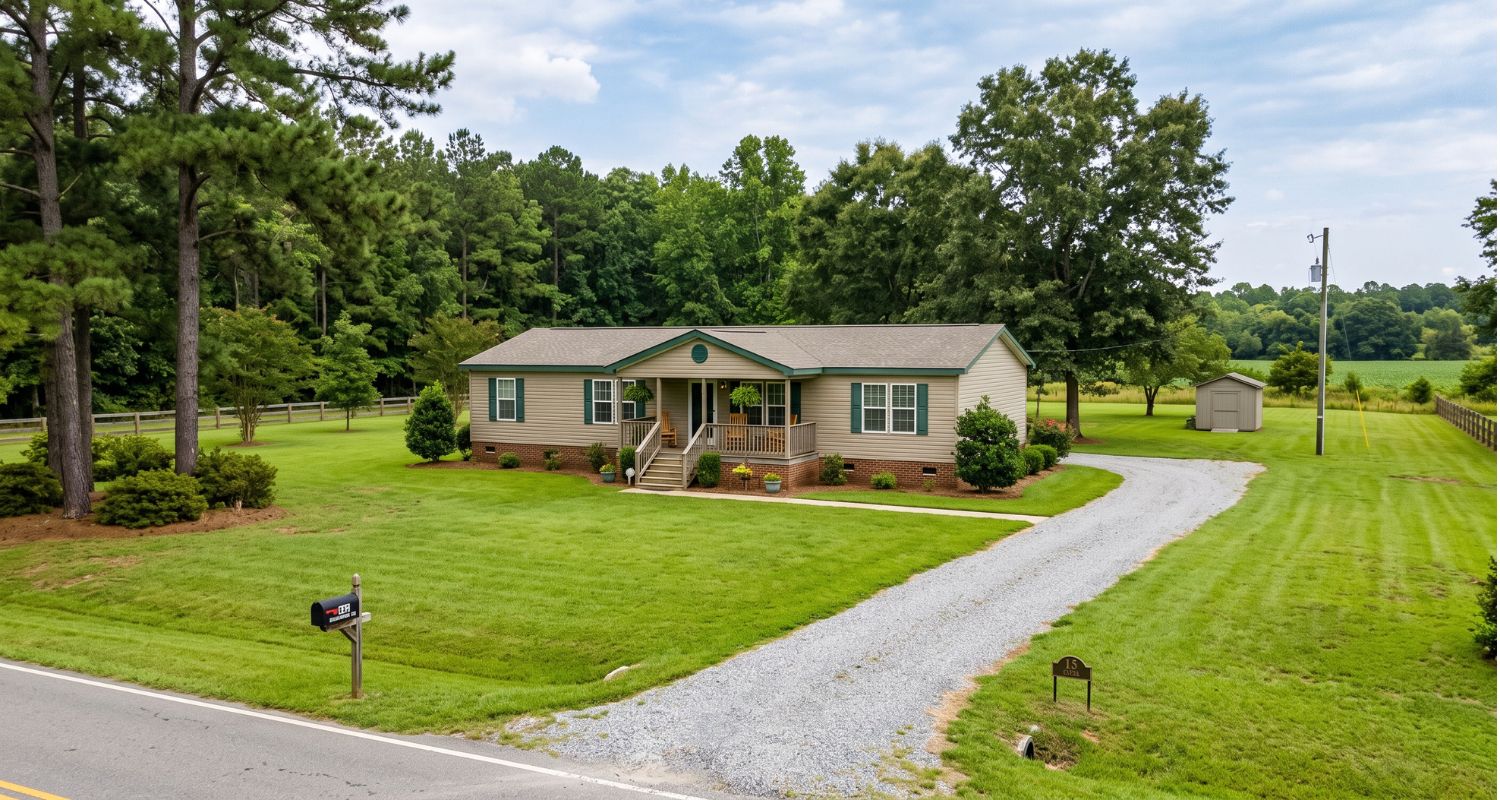
The property is a three-bedroom, two-bath manufactured home in Goldsboro, North Carolina, situated on approximately 1.5 acres. The investor purchased it with cash in 2017 for $80,000. It was properly detitled and affixed to the real property (i.e. the dirt) it sat on.
The home was fully livable at the time of the refinance, but it offered significant opportunity for value-adding renovations, both in terms of a higher after-repair value and stronger rent if the investor chose to hold it as a rental.
Buying with cash in 2017 meant the investor had built up substantial equity in the property over the years. That equity became the foundation for a cash-out refinance, unlocking capital for renovations without the investor needing to bring new money to the table.
Several factors made this a compelling investment despite the financing hurdles ahead.
What made the Goldsboro property stand out:
Because the home was already livable, the investor retained the flexibility to renovate based on her own terms rather than a lender-imposed timeline.
Many lenders apply stricter underwriting requirements to manufactured homes than to traditional site-built houses. Manufactured housing is frequently viewed as higher risk despite strong investment potential, and the options narrow even further when renovation funding is part of the request. This is exactly the kind of scenario where modular and mobile home lending from a specialized lender makes the difference.
Part of the challenge is that manufactured homes are sometimes classified differently than site-built homes, which affects how lenders appraise them and how readily they can be resold. For a lender focused strictly on those classifications, a strong investment can look like a problem loan on paper. Even the ability to insure the property can sometimes be problematic.
Additionally, the Goldsboro property’s rural setting created additional underwriting concerns. Many conventional lenders limit financing for rural investment properties because of appraisal and resale considerations, and in this case, the rural location became a larger obstacle than the borrower’s qualifications ever were.
Rural appraisals often have fewer comparable sales to draw from, which makes conventional lenders nervous about valuation. Combined with the manufactured-home classification, the location turned a straightforward equity position into a deal most banks simply would not touch.
The borrower maintained credit in the mid-600 range, which is acceptable for many investment lending programs. The property’s characteristics, not the borrower’s financial profile, were the primary reason traditional financing proved difficult.
This is a clear illustration of how asset-based lending works. It evaluates the overall strength of the investment rather than relying solely on conventional lending criteria.
Several common obstacles combined to push this deal outside the comfort zone of conventional financing.
The obstacles that stalled traditional financing:
Individually, any one of these can complicate a deal. Together, they made conventional financing impractical for an investor who needed both speed and flexibility.
It is worth emphasizing that none of these obstacles reflected poorly on the borrower. The investor had cash-purchase history, real equity, and a clear renovation plan. The friction came entirely from how conventional underwriting treats the property category and location, which is precisely the gap that asset-based lenders exist to fill.
EquityMax structured the financing as a cash-out refinance that funded the planned renovations in full at closing. Instead of forcing the investor to advance renovation costs and wait for reimbursement, the full budget was available from day one.
The key terms of the loan:
This structure removed the single biggest friction point in most renovation loans: the draw schedule. The investor never had to pause work while waiting on an inspection or a reimbursement check. Even at the onset, the budget was never reviewed or needed to be approved by the lender.
Rather than focusing on property type alone, EquityMax evaluated the overall strength of the investment. The manufactured home and rural location did not automatically disqualify the deal.
Underwriting considered the available equity, the renovation plans, and the potential exit strategies, then customized the loan structure around the investor’s goals instead of rigid lending requirements. This is the core advantage of asset-based lending: the decision follows the merits of the deal, not a checklist of property categories.
Once title work was returned, the loan closed within two days. There were no unnecessary delays or underwriting complications, and immediate access to capital allowed renovations to begin without interruption. That fast execution helped the investor preserve momentum on the project.
In real estate investing, speed is often its own form of leverage. A two-day close meant the investor could lock in contractors, order materials, and start adding value while the opportunity was fresh, rather than losing weeks to a drawn-out bank approval process.
One of the biggest advantages of this financing structure is that it kept several paths open. The investor was never locked into a single outcome before the renovations were even complete.
The investor’s available exit options:
Having three viable exits meant the investor could let the market and the finished product guide the decision, rather than being forced into a sale or a rental by the terms of the loan.
The planned renovations are expected to improve both property value and marketability. That added equity creates stronger resale and refinancing opportunities down the line.
Just as important, the flexible financing allows the investor to adapt to changing market conditions rather than committing to a single exit strategy before the work is even finished. If the sale market softens, the property can become a rental; if rents soften, a sale or a DSCR refinance remains on the table.
This Goldsboro transaction demonstrates EquityMax’s ability to finance investment properties that many lenders decline outright. Manufactured homes, rural properties, and unique investment scenarios call for flexible underwriting and an experienced lender.
EquityMax provides upfront renovation financing without burdensome draw schedules that slow projects, and fast closings help investors capitalize on opportunities while keeping their timelines intact. The financing also comes with the flexibility of a 17-year term and no prepayment penalty, giving the borrower full discretion over the right investment strategy: never rushed to sell, never forced to rent. From smaller loan amounts to complex value-add refinances, we structure financing around the deal. If your investment property doesn’t fit conventional lending guidelines, contact EquityMax for customized hard money financing designed around your investment strategy. You can also review our loan programs to see how we structure deals like this one.