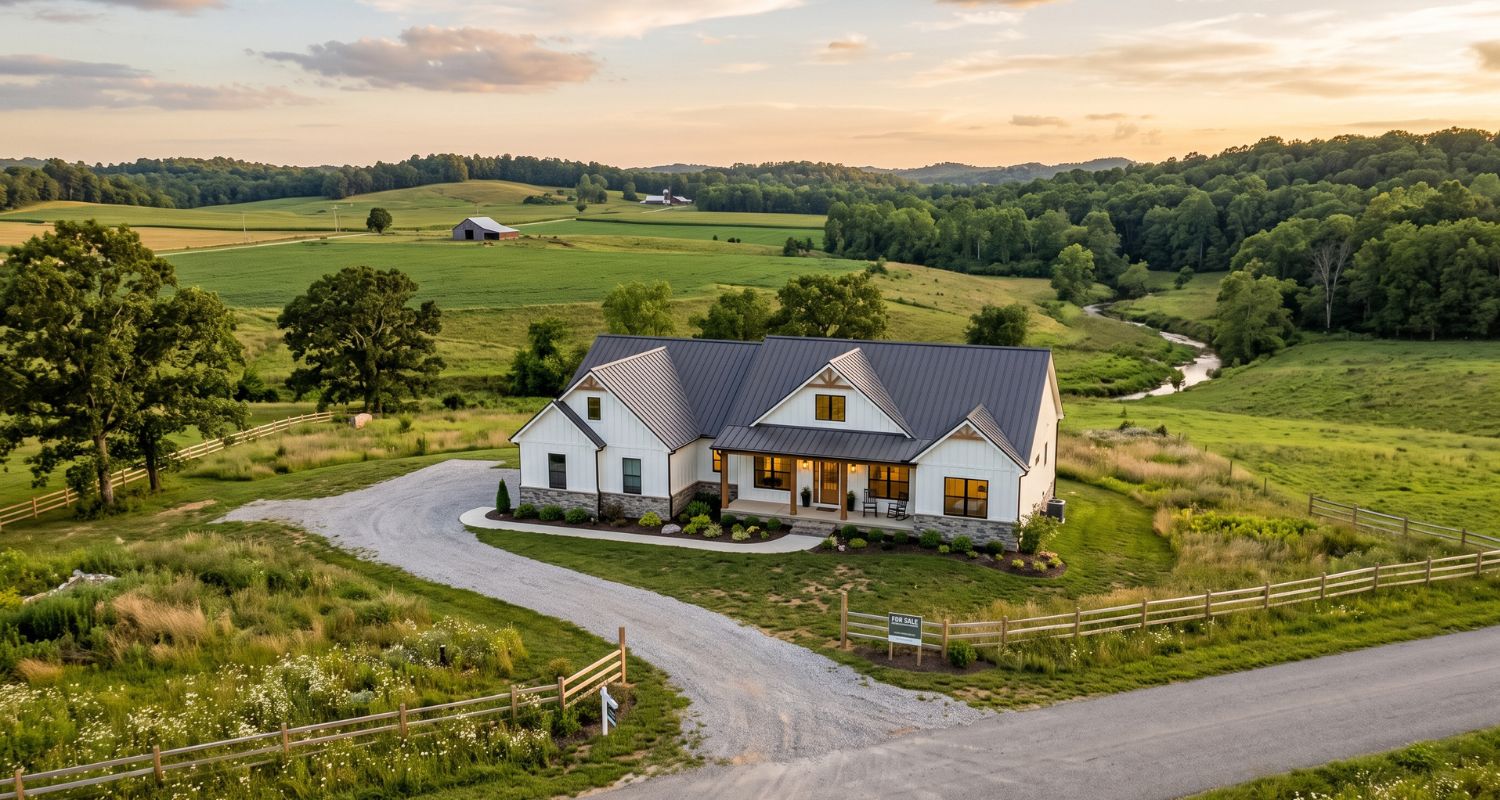
Rising home prices, limited inventory, and increased competition are making urban and suburban real estate markets more challenging for investors. Rural new construction is emerging as an attractive alternative.
New builds in rural markets offers the chance to acquire affordable land, build with less competition and lower costs, and meet growing demand for housing outside major population centers. Rural development carries its own challenges, but investors who understand the market dynamics can uncover genuinely profitable opportunities. Next, we explore the advantages, risks, and strategies behind rural real estate investing, including how construction completion loans from EquityMax can help investors finish projects when unexpected funding gaps arise.
The normalization of remote and hybrid work has untethered millions of buyers from urban job centers, expanding the viable homebuying radius significantly. Rural communities are attracting younger buyers and families who prioritize space, a lower cost of living, and a slower pace of life over proximity to a downtown office.
This is not a temporary pandemic-era blip. The shift in how and where people work has proven durable, and with it comes a lasting change in where people are willing to live and buy.
This demographic shift is creating real, sustained demand for new housing in markets that were previously overlooked, including secondary and vacation homes in calmer, more remote areas. Meanwhile, median home prices in major metros have reached levels that shrink investor margins and price out first-time buyers entirely. Rural markets offer a reset: lower acquisition costs, reduced permitting fees, and more negotiating room with landowners. Investors who enter these rural markets early stand to benefit as demand catches up with limited supply.
Rural land is typically far more affordable than urban and suburban parcels, which reduces acquisition costs and improves potential margins.
Why lower land costs matter:
Many institutional investors and large developers remain focused on major markets, leaving rural areas with far fewer competing buyers.
What less competition means for you:
Many rural communities have aging housing stock and limited availability of modern homes. New builds attract buyers looking for updated designs, energy efficiency, and move-in-ready properties, and limited inventory allows well-positioned projects to command stronger pricing.
Many buyers now prioritize space, privacy, outdoor amenities, and affordability over proximity to urban centers. Rural properties with larger lots and modern amenities appeal strongly to families, remote workers, and retirees.
There is also a simple but powerful advantage to building rather than renovating. In smaller markets, costs run lower across the board, even on materials, and at the end of the project you have a brand-new home rather than an older one that has been updated. It is hard to beat new – new plumbing, hvac, electrical, etc… Depending on the market, that new build might be a site-built home or a modular or manufactured home, both of which can serve rural buyers well.
Rural development is not without hurdles, and the investors who succeed are the ones who plan for them in advance.
The challenges to plan around:
Proper due diligence, realistic budgeting for holding costs, and dependable local partnerships are what separate a profitable rural build from a stalled one.
Finding the right market is largely a research exercise. Free government tools make it easier, including U.S. Census data, the USDA’s Rural Development resources, and the CFPB’s rural-or-underserved area tool.
A practical checklist for spotting strong rural markets:
Some rural municipalities actively incentivize residential development through expedited permitting, reduced fees, or tax abatement programs, so engaging with local planning departments early can pay off in both goodwill and accurate timelines.
Even well-planned projects can run into trouble. Unexpected cost overruns, delays, or simply running out of available capital before the finish line can leave an otherwise sound build stalled and at risk.
A construction completion loan gives investors the capital to finish a stalled project, protect their investment, and move the property toward sale or refinance. This kind of flexible financing is especially valuable for rural projects, where traditional lenders are often more hesitant to step in. EquityMax’s financing solutions, including construction completion loans, are built for exactly these situations.
The value of completion financing is often timing. A project that stalls halfway through can rack up holding costs, risk weather damage, or lose a buyer, so the ability to secure capital quickly and finish the build can be the difference between a profitable exit and a costly loss.
Rural new construction represents an emerging opportunity for investors willing to explore markets outside the traditional hotspots. Lower land costs, limited competition, and increasing demand can create attractive conditions for well-planned projects.
The investors who win in these markets are the ones who do their homework, build the right local relationships, and secure financing that can flex when a project hits a snag. Get those three things right, and a rural build can deliver margins that are increasingly hard to find in crowded urban and suburban markets.
Success requires careful market research, reliable partnerships, and access to the right financing when challenges arise. If your project needs additional capital to reach the finish line, contact EquityMax today to learn how construction completion loans can provide the financing support you need to finish your build and maximize your investment opportunity.