
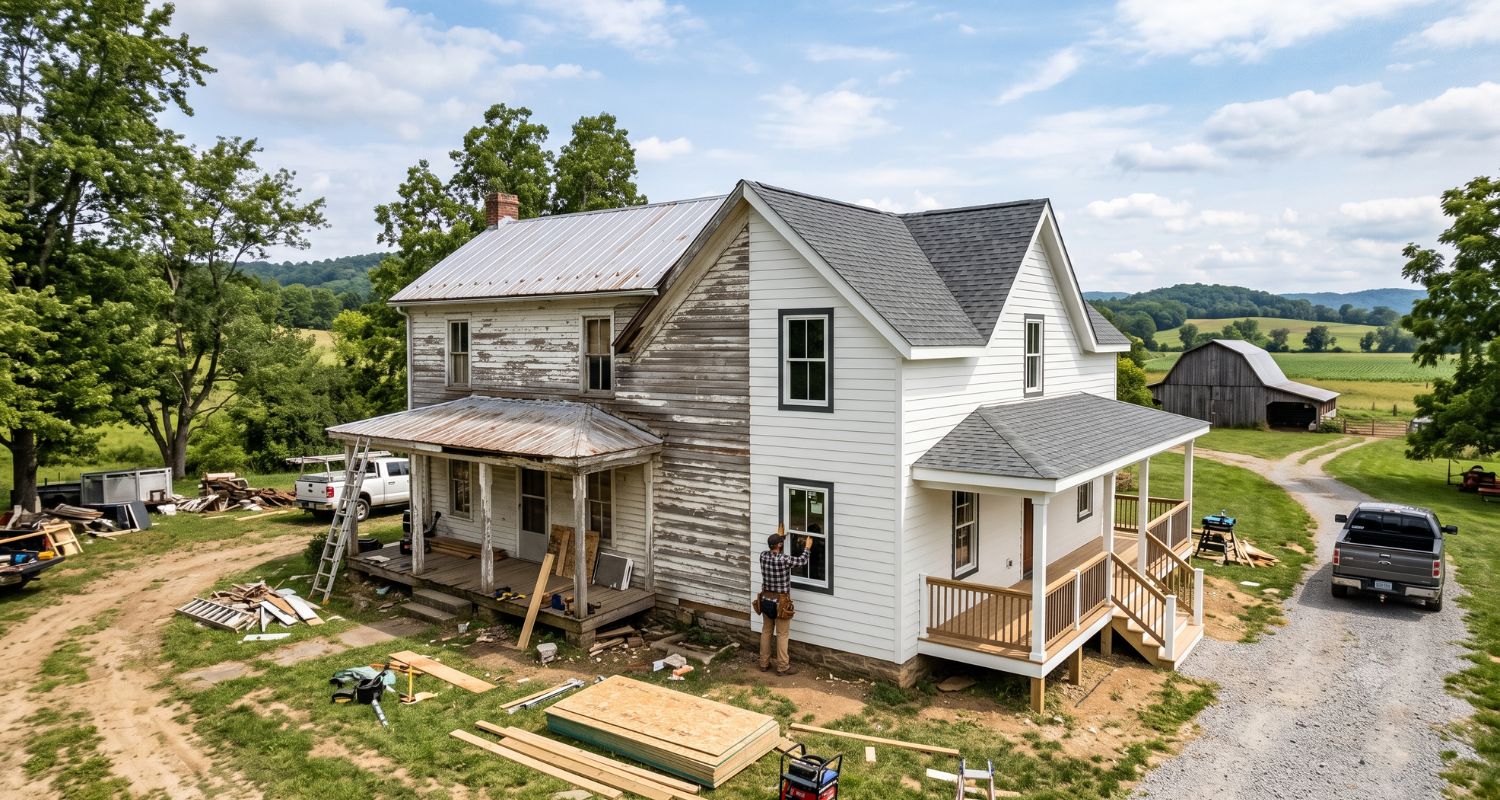
Rural fix-and-flip investing offers serious profit potential for those willing to do something different, but it comes with a unique set of obstacles that catch many investors off guard. The strategies that work in suburban markets don’t always translate to small towns and rural properties.
From scarce contractors and tricky ARV estimates to lenders who won’t touch rural properties, the challenges are real but beatable. Success requires understanding these hurdles before you’re standing in a half-finished project wondering where your contractor disappeared to.
This guide breaks down each major hurdle rural flippers face and pairs it with a practical, actionable solution. Whether you’re new to rural real estate investing or refining an existing strategy, you’ll walk away with a clear playbook for making rural flips work.
Rural properties often sell at steep discounts compared to suburban counterparts, creating larger spreads between acquisition cost and ARV. These wider margins provide more cushion for unexpected costs while still delivering strong returns.
Less investor competition means more time to negotiate favorable terms and fewer bidding wars. Lower entry costs reduce the total capital at risk per deal, while lower overall maintenance and repair costs improve your bottom line.
Remote work trends have driven more buyers to rural and small-town markets, increasing demand for renovated, move-in-ready homes. This demographic shift has transformed many previously stagnant rural markets into opportunities.
Limited housing inventory in rural areas means a well-rehabbed property can sell quickly at a premium. Real estate investing in rural areas lets you tap into markets that larger institutional investors tend to overlook, giving individual investors a genuine competitive edge.
Rural areas have fewer licensed contractors, which drives up labor costs and extends project timelines. Non-local contractors may mean well but they are likely unfamiliar with building ordinances and processes specific to that jurisdiction.
High-demand tradespeople often prioritize local residential clients over out-of-town investors. Contractor no-shows and mid-project dropouts are more common when the professional pool is thin, which can stall projects funded by construction completion loans and jeopardize your timeline.
Start networking before you need anyone by attending local hardware store events, county fair booths, and small business meetups. These relationships pay dividends when you need reliable help quickly.
Pay promptly and treat contractors like long-term partners, not just vendors, to earn preferred scheduling. Identify contractors in nearby towns or small cities who are willing to travel for the right project, and keep a short backup list of subcontractors for critical trades like plumbing, electrical, and roofing. Don’t underestimate local knowledge either, as asking your neighbors for suggestions could prove surprisingly useful.
Rural properties are often far from major distribution centers, adding days or weeks to standard delivery windows. Specialty materials like custom windows, HVAC units, or septic components may require extended lead times that catch unprepared investors off guard.
Unexpected delays compound holding costs, eating into projected profit margins. Every day materials sit undelivered is another day of interest, insurance, and taxes bleeding your returns.
Order long-lead materials immediately after closing, even before demolition begins. Build a 15-20% schedule buffer into your project timeline to absorb delays without panic.
Establish accounts with regional suppliers that stock rural-specific materials such as well pumps, septic systems, and agricultural-grade fencing. Consider renting a small storage unit near the property to pre-stage materials as they arrive, and if your business runs higher volume, consider buying in bulk for projects down the line.
Low transaction volume means comparable sales may be six to twelve months old, reducing their reliability. Wide geographic search radii pull in properties with varying land sizes, road access, or utility setups, distorting value. Simply put, MLS Sales Data may not be there.
Unique features like acreage, outbuildings, or water rights have no clean suburban equivalent, complicating appraisals. Rural properties aren’t as homogeneous as suburban tract homes, leading to discrepancies in comps. You might find manufactured home properties sitting next to new construction, making apples-to-apples comparisons nearly impossible.
Partner with a local real estate agent who specializes in rural sales and understands hyperlocal buyer behavior. Use a wider time window for comps (up to 18 months), but weight recent sales more heavily in your analysis.
Adjust conservatively for unique features, avoiding over-attributing value to acreage or outbuildings that most buyers won’t pay a premium for. Run your ARV estimate by a local appraiser before finalizing your offer price, and consider underestimating the value by 10% to build a cushion against a low appraisal from a report that doesn’t understand this niche market. Secondarily, you can always run an ARV estimate based on rental cash flow as well.
Lenders worry about limited resale liquidity in rural markets, which increases their perceived risk on collateral. Properties with non-standard features like well water, septic systems, or large acreage often fail conventional underwriting guidelines.
Low appraisal values in thin markets can push loan-to-value ratios outside acceptable lending thresholds. Conventional loan approval timelines rarely align with the fast-moving pace of fix-and-flip deals.
Fix-and-flip loans for rural properties from hard-money lenders focus on the deal’s asset value and profit potential rather than rigid underwriting checklists. Hard money loans close in days rather than weeks, letting investors move quickly on time-sensitive rural opportunities.
Lenders like EquityMax evaluate the property’s after-repair value and the investor’s exit strategy, not just credit scores or income documentation. Unlike other hard-money lenders, we don’t impose population or geographic area restrictions. Flexible loan structures can accommodate rural-specific quirks like unconventional lot sizes or non-city utilities.
Rural homes typically sit on the market longer than suburban properties, extending the period you’re paying loan interest, insurance, and taxes. Longer days-on-market forecasts must be factored into your deal analysis from the start, not treated as a surprise.
Utility costs for vacant rural properties, especially those with well pumps or older heating systems, can add up quickly. These ongoing expenses turn extended timelines into serious profit erosion.
Price the finished property aggressively from day one rather than testing the market high and reducing later. Compress your rehab timeline by pre-ordering materials and lining up contractors before closing.
List the property as soon as the most buyer-visible improvements, such as the kitchen, bathrooms, and curb appeal, are complete, even if minor punch-list items remain. Work with a local agent who has an active pipeline of buyers for rural properties to reduce time-to-offer and keep communication open throughout the rehab. Some properties can even be sold mid-construction for delivery upon completion.
Join local Facebook groups, county real estate forums, and rural investor meetups to quickly absorb on-the-ground market knowledge. Drive the area in person before making an offer, since road conditions, neighboring properties, and lot access can make or break a deal.
Identify the top two or three local real estate agents and pick their brains about buyer preferences, price points, and deal flow. This intelligence is invaluable and usually free to ask for.
Consider partnering with a local investor on your first rural deal to compress the learning curve. Don’t think of them as a mentor; think of them as a guide who knows the terrain.
Hire a local property manager or deal scout who can serve as eyes on the ground during the rehab. Build relationships with local title companies and attorneys who understand rural easements, water rights, and land-use quirks that trip up outsiders.
Rural fix-and-flip investing rewards investors who prepare for its unique challenges rather than assuming urban playbooks will transfer directly. The obstacles are real, but each one has a proven solution for investors willing to adapt.
Build your team early: a local agent, a reliable network of contractors, and a lender who understands rural real estate investing are the three pillars of every successful rural flip. When conventional financing falls short, fix-and-flip loans for rural properties from hard money lenders like EquityMax give you the speed and flexibility to fund deals that banks won’t touch.
Ready to move on to your next rural flip? Contact EquityMax today to get pre-qualified and keep your pipeline moving. Call (954) 267-9103 to discuss your rural investment strategy with a lender that says yes when others say no.