
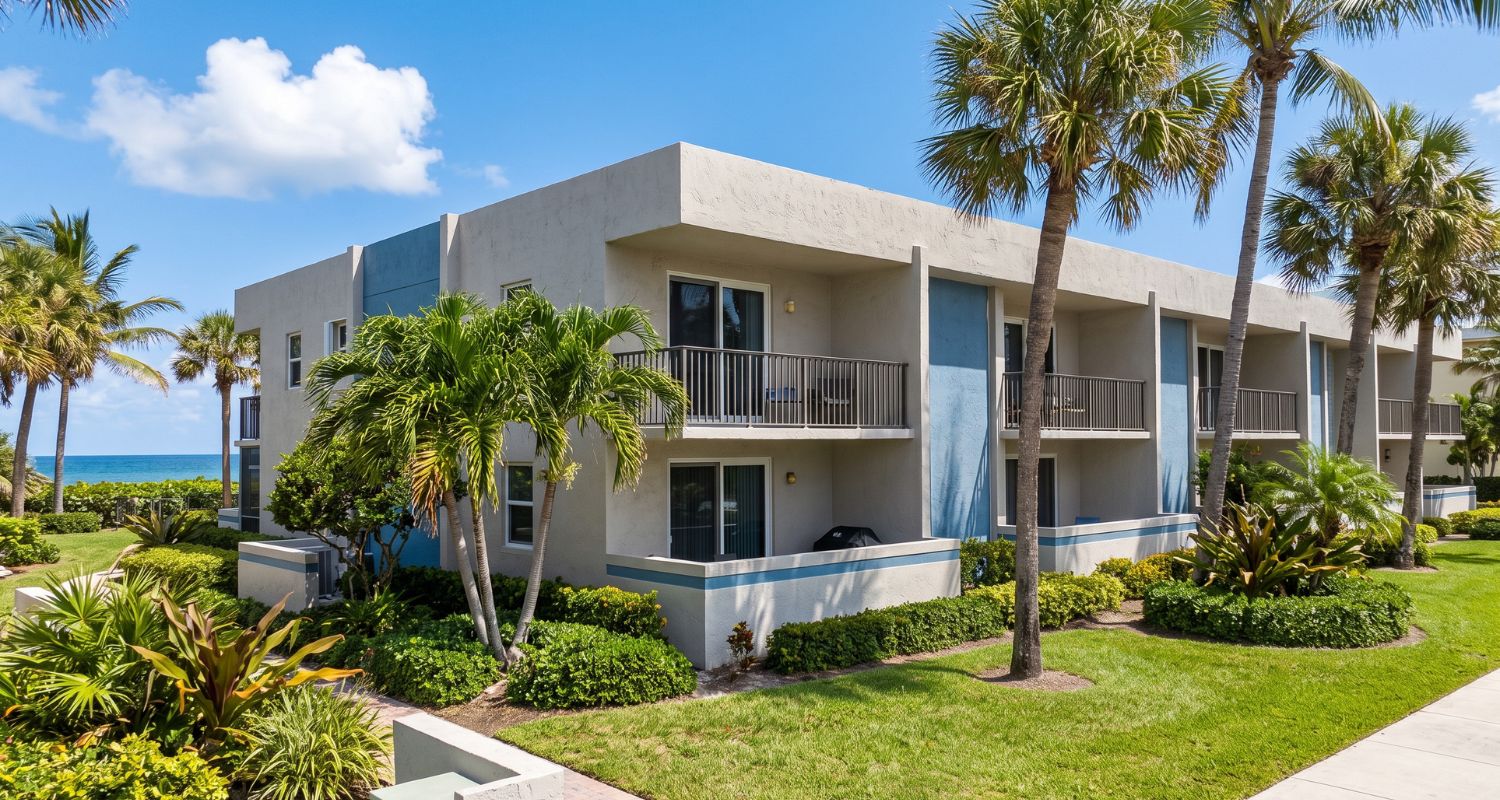
An investor in Deerfield Beach, Florida, picked up a small one-bedroom, one-bathroom condo out of bank foreclosure. Here is the twist: he did not need the loan to close. He had a high credit score and enough cash on hand to buy the property outright without financing at all.
He wanted a low-leverage hard money rehab loan so he could keep his own capital available for the renovation and his next acquisition rather than tying it all up in one purchase.
Most lenders passed anyway, and not for any reason related to him. This case study shows why, and how, EquityMax approaches small hard money loans that other lenders will not touch because of loan size, property type, or building restrictions.
The property was a one-bedroom, one-bathroom REO condo in Deerfield Beach, Florida, after the bank foreclosed on it. The purchase price came in under $100,000.
The building also carried a “zero rentals allowed” restriction, which matter enormously to how lenders evaluate a condo deal. Meaning, only homeowners can live in the units.
REO purchases often come with their own timing pressure, since banks holding foreclosed inventory generally want clean, fast closings rather than drawn-out financing contingencies.
This was not a marginal borrower. He had a high credit score and could pay cash for the property outright.
He sought financing as a strategy rather than out of necessity. Preserving liquidity meant he could fund the rehab and stay ready for the next opportunity instead of being fully invested in a single small condo.
Experienced investors think this way routinely. Cash is the tool that lets you act on the next deal, and locking it into one property removes that optionality.
On paper, a high-credit borrower buying an inexpensive property with plenty of cash reserves should be an easy approval. In practice, four separate factors each gave lenders a reason to decline.
The four deal-killers stacked on this transaction:
Any one of these alone can sink a loan application at a conventional institution. Together, they made this a deal most lenders would not underwrite, no matter how strong the borrower was.
The file never got far enough for his credit score or cash reserves to matter.
That is the part worth noting. The borrower’s qualifications were never the problem. The property’s characteristics were.
EquityMax looked at the same deal and saw a well-capitalized investor buying below market with a clear plan. The structure followed from that.
The loan terms:
Underwriting focused on the deal and the asset rather than a checklist of property type exclusions. That is the practical difference an asset-based hard money rehab loan makes when the property falls outside conventional categories.
The low leverage approach was deliberate. The goal was flexibility for the investor, not maximum loan proceeds, and that distinction shaped the entire structure.
Once title work was returned, the loan closed within two days. Very few hard money lenders for rehab projects can move that quickly on any deal, let alone a small-balance one.
Small loans often receive the least attention at lenders that do originate them, sitting behind larger transactions in the queue while bigger files get worked first. That was not the case here, and it is not how we handle small-balance deals generally.
Speed mattered even though this borrower was under no financial pressure. Closing fast kept his rehab timeline intact and let him start sourcing his next acquisition without waiting on a funding decision.
National lenders tend to operate through call centers and desk underwriting. Borrowers describe the experience as corporate, with each conversation starting over with a different representative.
On this deal, an EquityMax representative personally visited the property the same day rather than relying solely on a file review. Seeing the condo in person answered questions that paperwork alone would have left open.
That relationship-driven approach builds trust and speeds up decision-making, particularly on unique properties where the file does not tell the whole story. A condo with rental restrictions reads very differently on paper than it does when someone has actually walked the unit and the building.
The outcome for the investor was straightforward.
What the financing delivered:
None of that required the borrower to compromise on the property he wanted or to accept terms built for a different kind of deal.
The clearest measure of how the process went is what happened next. The borrower was pleased enough that he began sourcing his next deal before this rehab was even finished.
That is the kind of outcome we aim for on every transaction. A funded loan is a transaction, but a borrower who comes back is a partnership.
It also reflects something we hear often from repeat clients. Once an investor knows a lender will actually fund the unusual deals, they start underwriting opportunities differently, because properties they would previously have skipped become viable.
This Deerfield Beach transaction cleared four hurdles that stop most lenders cold: a small loan size, a condo, building rental restrictions, and a single-bedroom layout.
EquityMax funds small, low-leverage rehab loans that still make sense as deals, with a $15,000 minimum and no minimum credit score. We apply the same flexibility to manufactured and mobile homes and rural properties, which are declined just as routinely.
A family-owned lender since 1990, we evaluate the asset and the strategy rather than working down an exclusion list. Contact EquityMax to discuss financing for your next rehab, regardless of loan size or property type.